

In a world where kale and quinoa strut their stuff alongside greasy burgers and sugary snacks, the battle of healthy food versus junk food rages on. It’s a culinary showdown that has everyone picking sides, armed with forks and a side of fries. On one hand, you’ve got the vibrant veggies and wholesome grains promising vitality and longevity. On the other, the tantalizing allure of junk food whispers sweet nothings, tempting taste buds with every crispy crunch and gooey bite.
But let’s face it: choosing between nutrient-packed goodness and the guilty pleasures of junk food isn’t just about health; it’s a lifestyle choice. While one fuels the body like a high-octane engine, the other might just leave you feeling like a sluggish potato. So grab a seat and prepare for a delicious dive into the pros and cons of these culinary contenders. Who will emerge victorious in this tasty tug-of-war?
Healthy Food vs Junk Food:
Healthy food provides essential nutrients that support overall well-being. Fruits, vegetables, and whole grains contribute vitamins, minerals, and fiber, aiding digestion and promoting heart health. These foods lower the risk of chronic diseases such as obesity, diabetes, and cardiovascular issues.
In contrast, junk food often contains high levels of sugar, salt, and unhealthy fats. Snacks like chips, sodas, and candy serve as quick sources of energy but lack nutritional value. Consuming these items in excess leads to weight gain and other health challenges.
Calorie counts differ significantly between the two. A medium apple offers about 95 calories and plenty of water, which promotes hydration. A typical candy bar often contains 200 to 300 calories, mostly from sugars and fats with minimal nutrients.
The appeal of junk food lies in its convenience and taste. Many individuals reach for a bag of chips or a slice of pizza for a quick meal or snack. On the other hand, preparing healthy meals requires time and effort, which may deter some from making better choices.
Psychologically, healthy eating habits encourage long-term vitality. Individuals who prioritize nutritious foods often experience increased energy levels and enhanced mood. Problematic junk food consumption can lead to feelings of sluggishness or guilt.
Financially, healthy foods may cut costs in the long run. Investing in fresh produce and whole grains can reduce healthcare expenses associated with diet-related illnesses. Alternatively, the frequent purchase of junk food can add up quickly, contributing to substantial monthly expenses.
Understanding motivations and consequences assists individuals in making informed choices about their diets. Aligning personal health goals with food selections fosters better health outcomes over time.
Nutritional Value Comparison
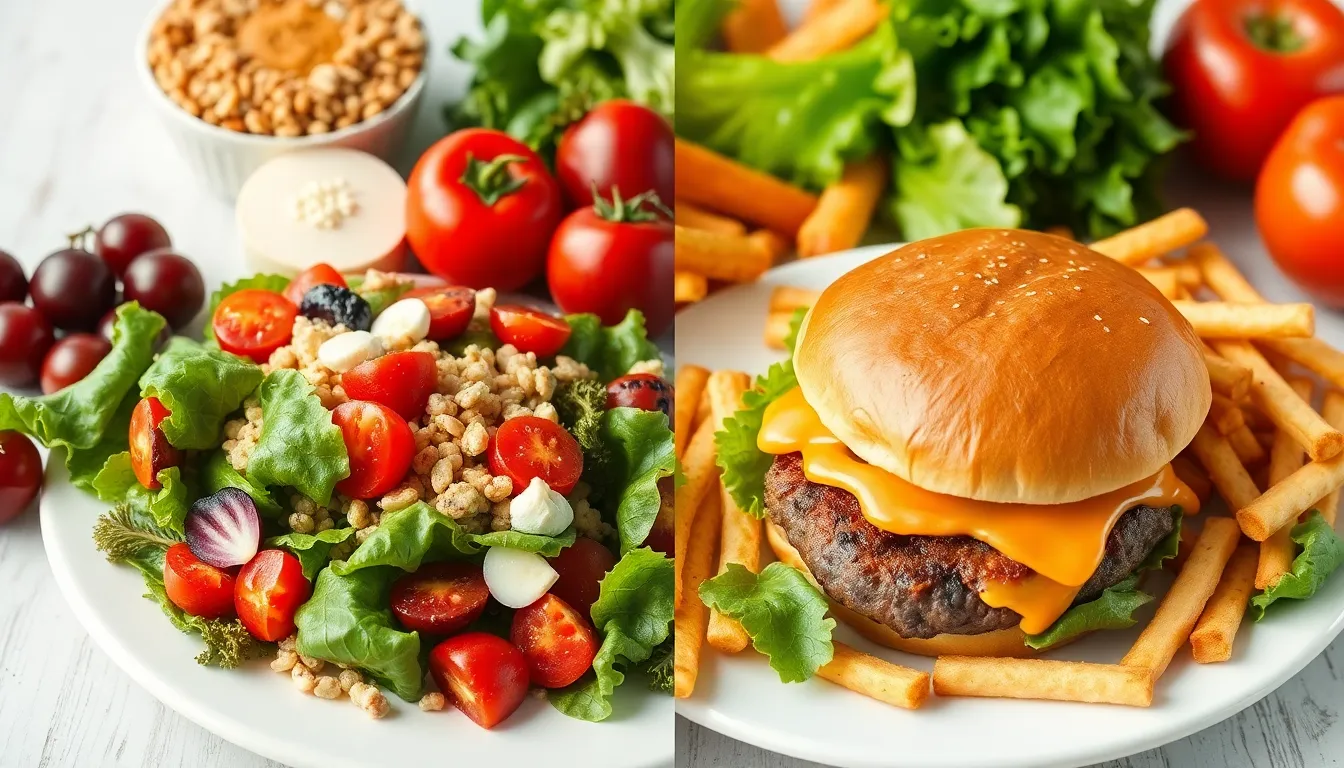
When comparing healthy food and junk food, the nutritional value plays a crucial role in overall well-being. Healthy food options provide essential vitamins, minerals, and antioxidants that enhance physical health. Fruits like bananas offer potassium, which supports heart health, while leafy greens supply iron for energy. Whole grains contribute fiber, promoting digestive health, and help prevent chronic diseases.
Benefits of Healthy Food
Healthy foods such as fruits, vegetables, and whole grains support immune function and provide energy. These foods carry lower calorie counts with high nutrient density, helping maintain a healthy weight. Regular consumption of nutritious food boosts mood and improves mental clarity. Additionally, antioxidants found in fruits and vegetables combat oxidative stress, reducing the risk of chronic diseases. Nutritionally balanced meals enhance metabolic functions, ensuring proper bodily operations and sustaining energy throughout the day.
Dangers of Junk Food
Conversely, junk food often contains unhealthy levels of sugar, salt, and saturated fats. Excessive sugar intake can lead to obesity, diabetes, and heart disease. Foods high in unhealthy fats contribute to high cholesterol levels and may increase the risk of cardiovascular issues. Additionally, junk food frequently lacks nutritional value, offering empty calories with minimal vitamins and minerals. Regular consumption can cause energy crashes and mood swings, leading to an unhealthy cycle of cravings. Over time, reliance on junk food can drive serious long-term health complications.
Impact on Health
Healthy food and junk food significantly affect overall well-being. Choices made in daily diets contribute to both immediate and long-lasting health outcomes.
Short-Term Effects
Healthy foods enhance energy levels and improve mood soon after consumption. For instance, a nutritious meal can boost alertness while helping maintain stable blood sugar levels. Conversely, junk food often leads to spikes in energy followed by crashes, causing fatigue. Often, individuals may feel guilty or sluggish after indulging in high-sugar or high-fat options. Mental clarity fluctuates with the type of food consumed, with nutritious choices fostering sharper focus and performance. It’s clear that immediate food choices play a crucial role in daily functioning and mental well-being.
Long-Term Consequences
Consistent intake of healthy foods leads to lower risks of chronic diseases, such as heart disease and diabetes. Nutrient-rich diets promote healthy weight management and improve immune function, contributing to overall longevity. On the other hand, frequent consumption of junk food can result in serious health issues over time. Obesity, driven by excessive calories from junk options, often increases the likelihood of developing health conditions. Long-term reliance on processed foods may lead to nutritional deficiencies, impacting physical and mental health. Evaluating dietary patterns reveals their profound effects on lifelong health outcomes and quality of life.
Psychological Effects
Eating choices significantly influence psychological well-being. Healthy foods impact mood and energy in positive ways.
Mood and Energy Levels
Healthy foods promote better mood stability. Nutrient-rich options like fruits and vegetables provide essential vitamins that enhance mental clarity. In contrast, junk food often leads to energy spikes, followed by crashes that contribute to feelings of fatigue. Regular consumption of nutritious meals supports sustained energy throughout the day. Studies show that diets high in whole grains and lean proteins correlate with improved mood and reduced anxiety symptoms. Transitioning to healthier eating habits consistently enhances both emotional and physical vitality.
Eating Habits and Cravings
People experience various cravings influenced by dietary choices. Junk food’s high sugar content creates strong urges for more, leading to unhealthy habits over time. Healthy eating patterns can help mitigate these cravings by stabilizing blood sugar levels. Incorporating fiber-rich foods reduces hunger and promotes satiety, making it easier to choose wholesome options. Additionally, a balanced diet encourages a natural preference for nutritious foods. Research suggests that repeated exposure to healthy choices decreases cravings for junk foods, fostering a healthier relationship with food overall.
Social and Economic Factors
Access to healthy food varies widely based on geographic location, socioeconomic status, and community resources. Urban areas often feature supermarkets that offer fresh produce, while food deserts lack such options. Individuals in low-income neighborhoods may rely on convenience stores that sell processed foods, further limiting access to nutritious choices.
Costs associated with healthy food and junk food can influence dietary habits. Healthy foods, particularly organic fruits and vegetables, may have higher upfront costs. In contrast, junk food tends to be cheaper and more convenient, especially when buying in bulk. A 2020 study revealed that individuals spending more on healthy options can see long-term savings in healthcare costs. The affordability of junk food often outweighs its nutritional shortcomings, encouraging frequent consumption over healthier alternatives. Ultimately, economic factors heavily shape food choices, revealing the complexities of diet and health.
Conclusion
Choosing between healthy food and junk food involves more than just nutritional value. It’s a reflection of personal preferences lifestyle choices and even economic factors. While healthy foods offer vital nutrients that support long-term health and well-being junk foods provide instant gratification but come with significant risks.
Understanding the impact of these choices can empower individuals to make informed decisions. By prioritizing nutrient-dense foods it’s possible to enhance energy levels improve mood and reduce health risks. Ultimately fostering a balanced relationship with food can lead to a healthier and more fulfilling life.