

Octopus might not be the first thing that pops into mind when thinking about healthy eating, but it’s time to reconsider. This ocean-dwelling delicacy is more than just a fancy dish at your favorite seafood restaurant; it’s a powerhouse of nutrition that could give even the most devout kale lover a run for their money. Packed with protein, low in calories, and rich in essential nutrients, octopus is ready to dive into your diet.
But wait—before you start imagining a tentacled feast, let’s clear the air. Eating octopus isn’t just about health; it’s also about flavor and culinary adventure. Whether grilled, sautéed, or tossed in a salad, this versatile seafood can keep your taste buds tingling while boosting your well-being. So, is eating octopus healthy? Let’s unravel the truth behind this intriguing ingredient and see if it deserves a spot on your dinner plate.
Is Eating Octopus Healthy
Octopus offers impressive nutrition, making it a smart dietary choice. High protein, low calories, and essential nutrients highlight its value.
Protein Content
Protein serves as a crucial building block for muscles. A 3-ounce serving provides about 25 grams of protein. This amount meets a significant portion of daily protein requirements. Octopus contains all nine essential amino acids, which play a vital role in overall health. Including octopus in meals can aid muscle recovery and promote satiety.
Vitamins and Minerals
Octopus delivers an array of vitamins and minerals. It is rich in vitamin B12, contributing to nerve function and red blood cell formation. A single serving packs around 320% of the daily value for B12. Iron content in octopus supports oxygen transport in the body, helping prevent anemia. Additionally, it contains selenium, an antioxidant that promotes a healthy immune system.
Health Benefits of Eating Octopus
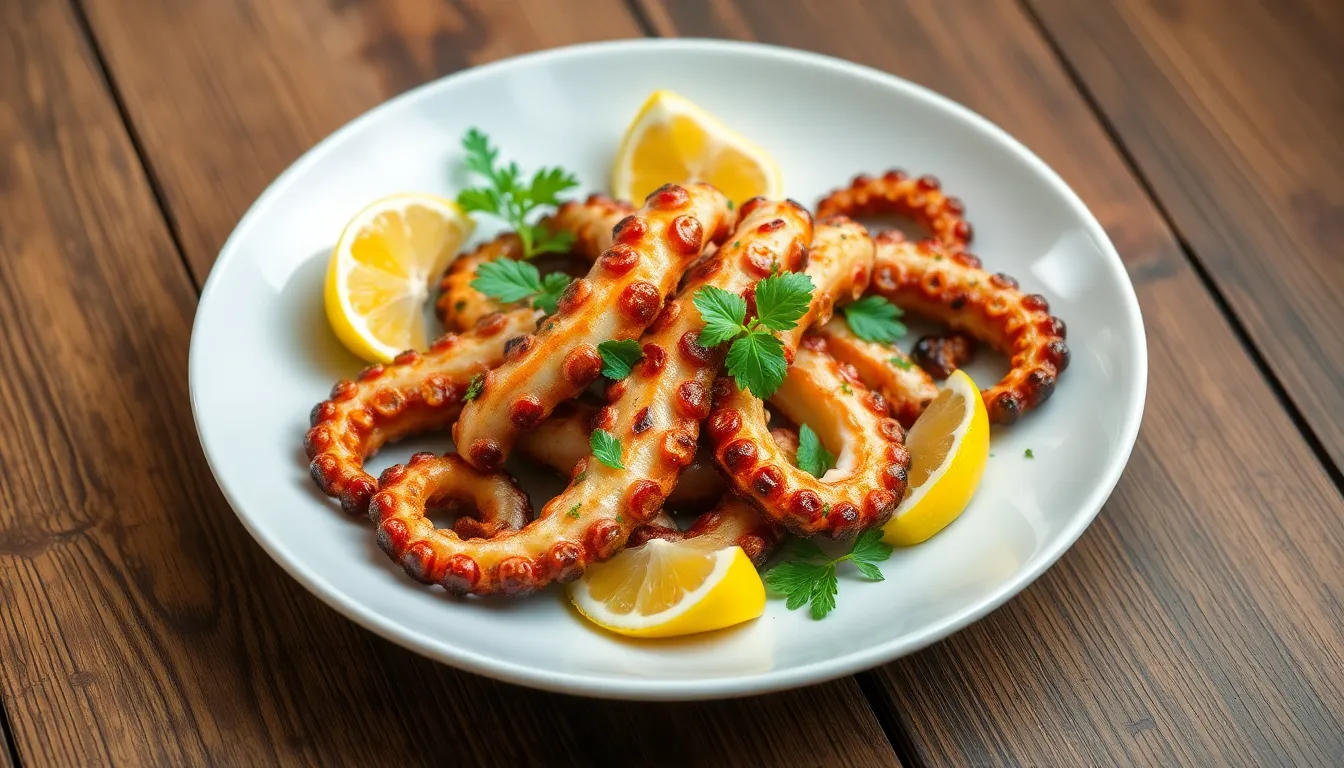
Eating octopus offers numerous health benefits, particularly for heart health and brain function.
Heart Health
Regular consumption of octopus contributes positively to heart health. It’s low in saturated fat, making it a heart-friendly protein option. A serving provides omega-3 fatty acids, which help lower cholesterol levels. These fatty acids also reduce the risk of heart disease and promote overall cardiovascular health. Additionally, octopus contains potassium, vital for maintaining normal blood pressure levels. Research shows that potassium helps mitigate hypertension effects. Including octopus in a balanced diet promotes a healthier heart over time, making it a valuable choice for those focused on cardiovascular wellness.
Brain Function
Octopus supports brain function thanks to its rich nutrient profile. A significant source of vitamin B12, it enhances cognitive health and supports nerve function. B12 plays a crucial role in preventing memory loss and maintaining mental clarity. Furthermore, octopus provides nutrients like iron, essential for oxygen transport in the brain. Sufficient oxygen levels lead to improved concentration and mental performance. Antioxidants like selenium contribute to protecting brain cells from damage. Eating octopus can therefore bolster cognitive function and promote overall brain health, establishing it as a smart dietary choice.
Potential Risks of Eating Octopus
Eating octopus presents some potential risks that consumers should consider. While this seafood offers many health benefits, awareness of certain concerns is crucial.
Mercury Levels
Mercury accumulation in seafood can pose health risks, and octopus isn’t excluded from this issue. High mercury levels in seafood may lead to neurological damage, particularly in vulnerable populations such as pregnant women and young children. Various studies indicate that octopus has moderate mercury levels, generally lower than larger fish like shark or swordfish. Regularly consuming octopus may elevate mercury levels in the body over time. Limiting intake to a few servings per month can help mitigate potential risks.
Allergies
Some individuals may experience allergic reactions to octopus, a consideration for seafood lovers. Symptoms of octopus allergies can range from mild hives to severe anaphylaxis, impacting a small percentage of the population. Cross-reactivity with other shellfish allergies is common, and those with existing seafood allergies should exercise caution. It’s essential for those at risk to seek medical advice before incorporating octopus into their diets. Awareness of potential allergies helps ensure a safe dining experience.
Culinary Ways to Enjoy Octopus
Octopus offers diverse culinary options that captivate palates with various cooking methods and popular dishes.
Cooking Methods
Grilling brings out octopus’s natural flavors and creates a delightful char. When boiled, it remains tender while absorbing seasonings. Steaming ensures moisture retention and enhances tenderness. Pan-searing adds a crispy texture to the outer layer, complementing its soft inside. For those curious about different preparations, a slow cook infuses flavor deeply while maintaining juiciness. Each method emphasizes octopus’s versatile nature and enhances its unique taste.
Popular Dishes
Tacos de pulpo highlight octopus’s richness paired with vibrant salsa and fresh ingredients. Mediterranean salads blend octopus with olives, tomatoes, and herbs for a refreshing dish. A classic octopus carpaccio showcases thinly sliced tentacles, drizzled with olive oil and lemon juice. Grilled octopus served with chimichurri reflects bold, zesty flavors. Lastly, a comforting octopus stew combines tomatoes and spices, offering robust flavors. These dishes exemplify octopus’s culinary potential and appeal to various tastes.
Conclusion
Eating octopus can be a nutritious choice that adds variety to one’s diet. Its impressive protein content and essential nutrients make it beneficial for overall health. The culinary versatility of octopus allows for creative meal options that cater to different tastes.
However it’s important to be mindful of potential risks such as mercury levels and allergies. Moderation is key when incorporating octopus into meals. By being aware of these factors individuals can enjoy the health benefits of octopus while ensuring a safe dining experience. Embracing octopus as part of a balanced diet can lead to delicious and healthful meals.