
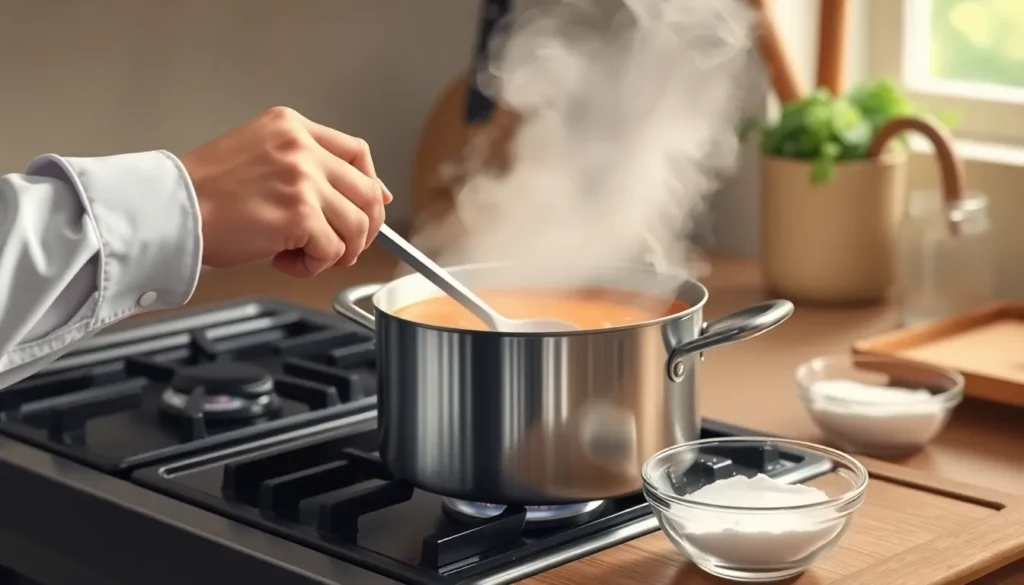
When it comes to soup, no one wants a watery disaster. Picture this: you’ve slaved over a hot stove, only to end up with a bowl of broth that could double as a swimming pool. Fear not! The secret to achieving that velvety, mouthwatering consistency lies in one magical ingredient—cornstarch.
How Much Corn Starch to Thicken Soup
Corn starch serves as an excellent thickening agent for soups. It’s a versatile ingredient that transforms watery broths into creamy textures.
What Is Corn Starch?
Corn starch is a fine, white powder derived from the endosperm of corn kernels. This starch is primarily used in cooking and baking as a thickener for sauces, soups, and gravies. When mixed with water or another liquid, it creates a slurry that enhances consistency. Corn starch doesn’t impart a strong flavor, allowing the original taste of soup ingredients to shine through. It’s gluten-free, making it a suitable option for those with gluten sensitivities.
How Does Corn Starch Work?
Corn starch thickens liquids through a process called gelatinization. Heat activates the starch granules, causing them to swell and absorb moisture. When added to soup, these granules disperse and thicken the liquid. Using a slurry, which combines corn starch with cold water, ensures better mixing and prevents clumping. Stirring constantly when adding this mixture helps evenly distribute the starch for a smooth finish. The thickening effect typically occurs at temperatures around 140°F to 200°F, making it ideal for simmering soups.
Ideal Measurements for Thickening Soup
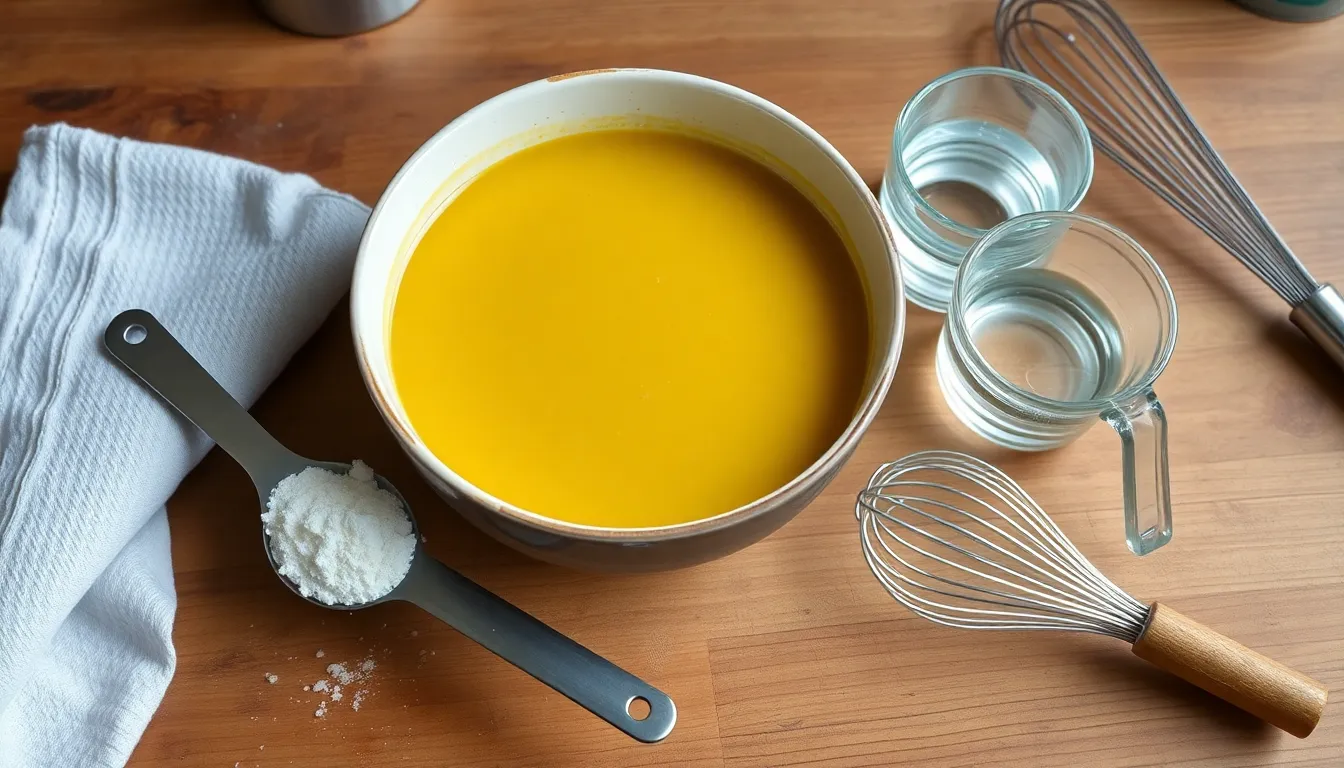
Measuring the right amount of cornstarch is essential for achieving the perfect soup consistency. Using precise measurements ensures that the soup reaches a desired thickness without compromising flavor.
General Guidelines for Corn Starch
Start with 1 tablespoon of cornstarch per cup of liquid. This ratio effectively thickens soups without overwhelming the dish. Mix the cornstarch with an equal amount of cold water to create a smooth slurry. Adding the slurry to the simmering soup in a gradual manner prevents clumping. Stir constantly until the mixture thickens, which usually takes 1 to 2 minutes.
Adjusting Ratios for Different Soups
Increase the cornstarch for creamier soups. For heavier, richer soups, like a chowder, use 2 tablespoons per cup of liquid. Lighter broth-based soups benefit from the standard 1 tablespoon per cup. When working with sauces, reduce to 1 tablespoon for every 2 cups of liquid to maintain balance. Adjusting these measurements according to the desired thickness creates an optimal texture that enhances the overall dish.
Step-by-Step Process to Thicken Soup
Thickening soup with cornstarch involves precise steps to achieve a smooth consistency.
Preparing the Corn Starch Slurry
Begin by measuring 1 tablespoon of cornstarch for every cup of liquid. Mixing the cornstarch with an equal amount of cold water creates a slurry. Stir the combination until smooth, ensuring no lumps remain. This minute step prevents clumping once added to the soup. Increasing cornstarch to 2 tablespoons may be beneficial for creamier soups. Utilize this method to enhance texture without altering flavor.
Adding the Slurry to Soup
Gradually pour the prepared slurry into the simmering soup. Stir constantly while adding to maintain an even distribution throughout the liquid. Allow the soup to cook for 1 to 2 minutes after incorporating the slurry. This brief cooking time activates the cornstarch, thickening the mixture effectively. Adjustments in the amount of slurry should match desired thickness. For sauces, reduce the measurement to 1 tablespoon for every 2 cups of liquid for optimal results.
Tips for Achieving the Perfect Consistency
Achieving the right consistency in soup enhances the overall dining experience. Attention to detail during preparation ensures a smooth, thick texture.
Common Mistakes to Avoid
Avoid adding cornstarch directly to hot soup, as this can lead to clumping. Instead, always create a slurry with cold water first. Not stirring vigorously while adding the slurry often results in uneven thickening. A gradual addition of the slurry while stirring continuously ensures better results. Another mistake includes not allowing enough cooking time after adding the slurry; 1 to 2 minutes is essential for activation. Finally, some cooks may overestimate the amount of cornstarch needed, so sticking to the recommended measurement of 1 tablespoon per cup of liquid helps maintain flavor balance.
Alternative Thickening Agents
Cornstarch isn’t the only option for thickening soup. Flour serves as a common alternative, with a typical ratio of 2 tablespoons per cup of liquid. This requires cooking longer to eliminate the raw taste. Arrowroot powder also acts as an effective thickener. Using 1 tablespoon per cup of liquid, it holds up well in acidic ingredients. Another option is potato starch, which can be used in the same amount as cornstarch. Each thickening agent contributes its unique properties; thus, experimenting allows for discovering a preferred texture and flavor profile while maintaining the dish’s essence.
Conclusion
Achieving the perfect soup thickness is simple with cornstarch as a reliable thickening agent. By following the recommended measurements and techniques for creating a slurry it’s easy to elevate any soup’s texture without compromising flavor. Experimenting with different thickening agents can also lead to delightful variations in consistency and taste. With a little practice and attention to detail anyone can master the art of thickening soups to create comforting and satisfying dishes. Enjoy the process and savor the delicious results.