
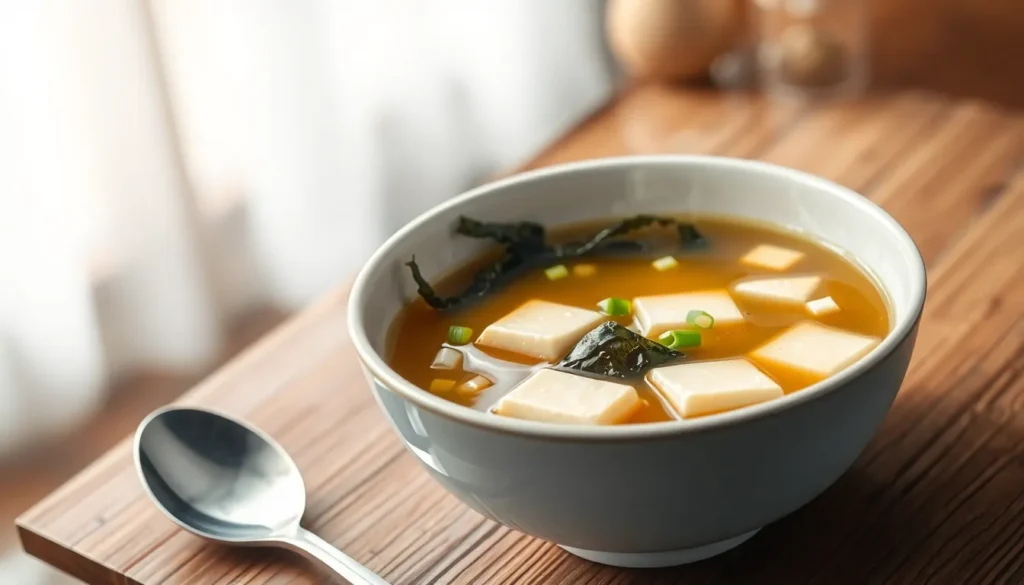
Miso soup is a warm hug in a bowl, bringing comfort and flavor to countless meals. But just like that last slice of pizza, it doesn’t last forever. So how long can you keep that savory goodness before it turns into a science experiment? Spoiler alert: it’s not as long as you might think.
How Long is Miso Soup Good For
Miso soup features a rich, umami flavor due to its primary ingredient, miso paste. This paste, made from fermented soybeans, contributes to both the taste and nutritional profile of the soup. Common ingredients include seaweed, tofu, and green onions, which enhance its overall appeal.
Shelf life plays a crucial role in enjoying miso soup at its best. When stored properly, homemade miso soup lasts three to five days in the refrigerator. Commercial brands often include preservatives, allowing them to remain fresh longer, sometimes up to a week after opening. It’s essential to keep the soup in an airtight container to minimize exposure to air and bacteria.
Freezing provides an option for extended storage. Miso soup can remain frozen for about three months without significant loss of quality. When thawed, the texture and flavor may change slightly, but many find it still enjoyable. Reheating should occur gradually over low heat to prevent overcooking.
Awareness regarding signs of spoilage is vital. If a foul smell emerges, or a slimy texture develops, discarding the soup is the best option. Trusting one’s senses helps ensure safety when consuming stored miso soup.
Understanding these factors allows for a greater appreciation of miso soup. Enjoying it fresh contributes to the best possible experience, maximizing its health benefits and flavor.
Shelf Life of Miso Soup

Miso soup varies in shelf life based on its storage condition and packaging. Proper storage helps maintain its flavor and safety for consumption.
Unopened Miso Soup
Unopened miso soup can last significantly longer than opened varieties. Commercially packaged miso soup typically stays fresh for 6 to 12 months when stored in a cool, dark place. Check the expiration date on the packaging; it often indicates peak quality. Store-bought options usually contain preservatives, extending their shelf life. Always keep unopened packages away from direct sunlight to preserve freshness.
Opened Miso Soup
Opened miso soup requires more attention to maintain its quality. Once opened, homemade miso soup lasts about 3 to 5 days in the refrigerator. Commercially opened products may last up to a week if stored correctly. Placing the soup in an airtight container minimizes exposure to air and bacteria, enhancing its longevity. If freezing, it’s best to consume the soup within 3 months; some loss in texture and flavor may occur upon thawing. Always inspect for signs of spoilage before consumption.
Storage Tips for Miso Soup
Proper storage enhances the flavor and longevity of miso soup. Taking the right precautions ensures a delicious experience with every bowl.
Refrigeration Techniques
Keeping miso soup in the refrigerator extends its freshness. For best results, use an airtight container to limit air exposure. Such containers prevent bacterial growth and maintain flavor integrity. Ideally, store the soup at a constant temperature below 40°F (4°C). Check for signs of spoilage before consumption. Homemade versions last three to five days, while opened commercial types last about a week.
Freezing Miso Soup
Freezing miso soup offers a great option for long-term storage. First, cool the soup to room temperature. Then, pour it into freezer-safe containers or bags, leaving space for expansion. Soup can remain in the freezer for about three months, although some texture changes may occur. Thaw in the refrigerator overnight for the best results. Reheat gently on the stove, ensuring even warming to preserve flavor.
Signs of Spoilage
Recognizing spoilage in miso soup helps prevent foodborne illnesses and ensures a safe dining experience. She should observe specific indicators to determine if the soup is still suitable for consumption.
Off Odors and Colors
Foul odors often signal spoilage in miso soup. A sharp, rancid smell indicates that the soup has gone bad. Additionally, changes in color can also provide clues. If the miso soup appears unusually dark or develops a grayish tint, these alterations suggest that it’s no longer fresh. Checking for off odors and discoloration is essential before consumption.
Texture Changes
Slimy textures serve as a clear warning sign of spoilage. When miso soup exhibits a slippery consistency, it’s best to discard it. A lumpy or curdled texture also indicates that spoilage has occurred. Texture changes often point to bacterial growth or fermentation that went wrong, so observing these alterations is necessary for safety.
Conclusion
Miso soup offers a delightful blend of flavors and health benefits. To fully enjoy its rich taste and nutritional value it’s essential to be mindful of its shelf life. Proper storage methods can significantly extend its freshness. Recognizing signs of spoilage ensures safety and enhances the dining experience. Whether it’s homemade or store-bought knowing how long miso soup lasts allows for better meal planning and enjoyment. Trusting one’s senses when it comes to freshness is key to savoring this comforting dish.